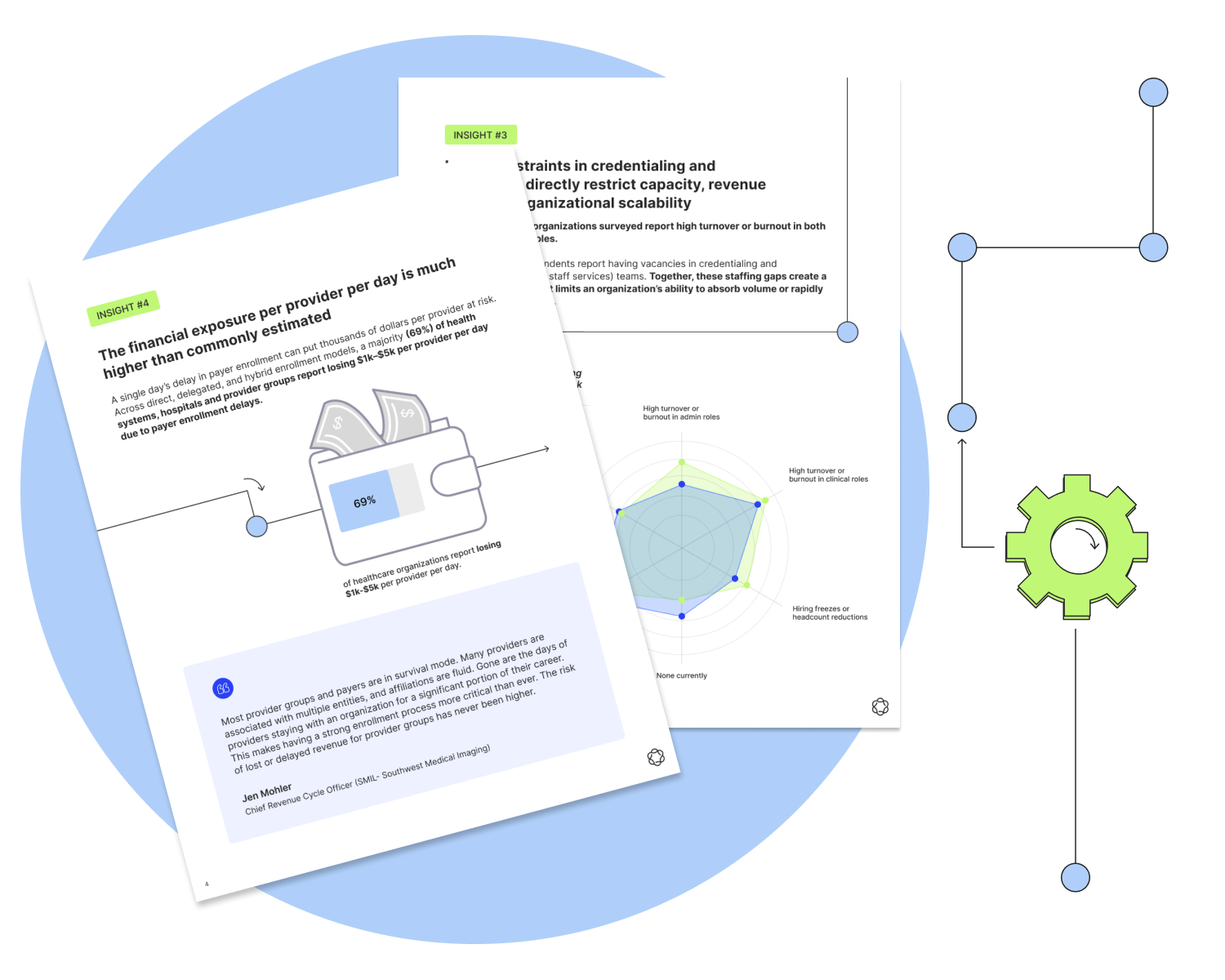
Most provider groups and payers are in survival mode. Many providers are associated with multiple entities, and affiliations are fluid. Gone are the days of providers staying with an organization for a significant portion of their career. This makes having a strong enrollment process more critical than ever. The risk of lost or delayed revenue for provider groups has never been higher."

.svg)
Most AI investment still targets clinical documentation, leaving credentialing and enrollment with only 12% of spend. And with 16% of organizations not investing in AI at all, compliance concerns and integration hurdles continue to slow meaningful progress.
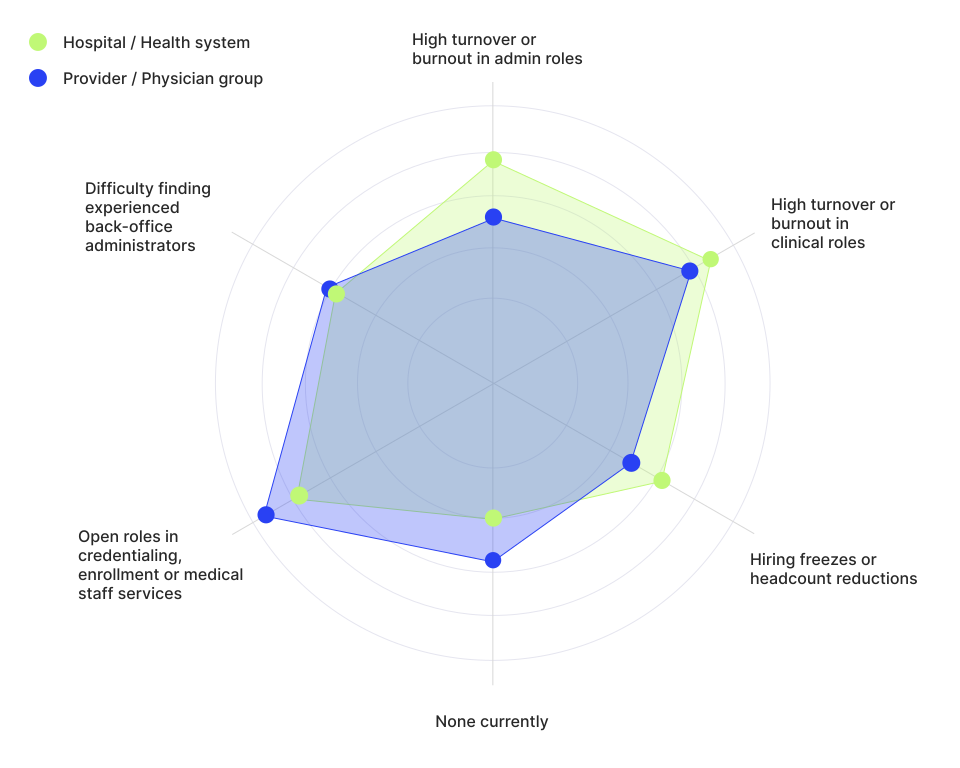
38% of organizations report high turnover or burnout across admin and clinical teams, and another 20% have vacancies in credentialing and enrollment roles. These gaps are making it difficult to absorb demand, reduce backlogs or onboard new providers quickly.
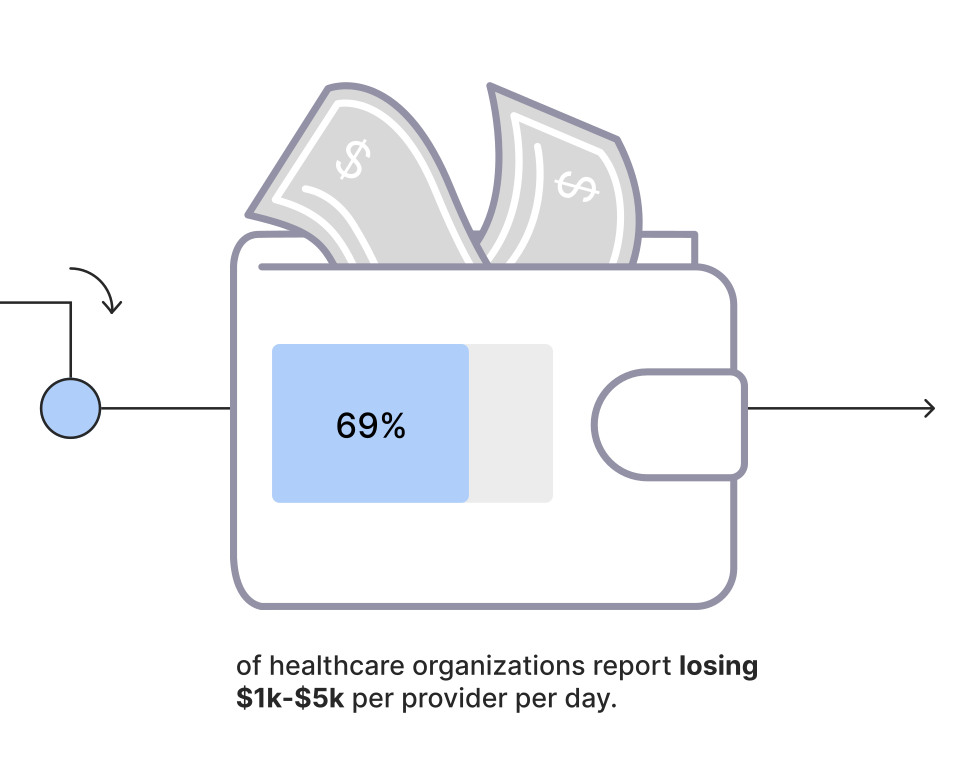
The financial exposure is far higher than many leaders assume. 69% of organizations lose $1k–$5k per provider per day due to payer enrollment delays, across direct, delegated, and hybrid models — turning even brief bottlenecks into significant revenue risk.