While AI and automation offer benefits, such as reducing processing times, improving accuracy, and accelerating revenue capture, adoption remains slow by organizations, health plans and accreditors. We need to utilize AI and automation to reduce credentialing and provider enrollment timeframes."

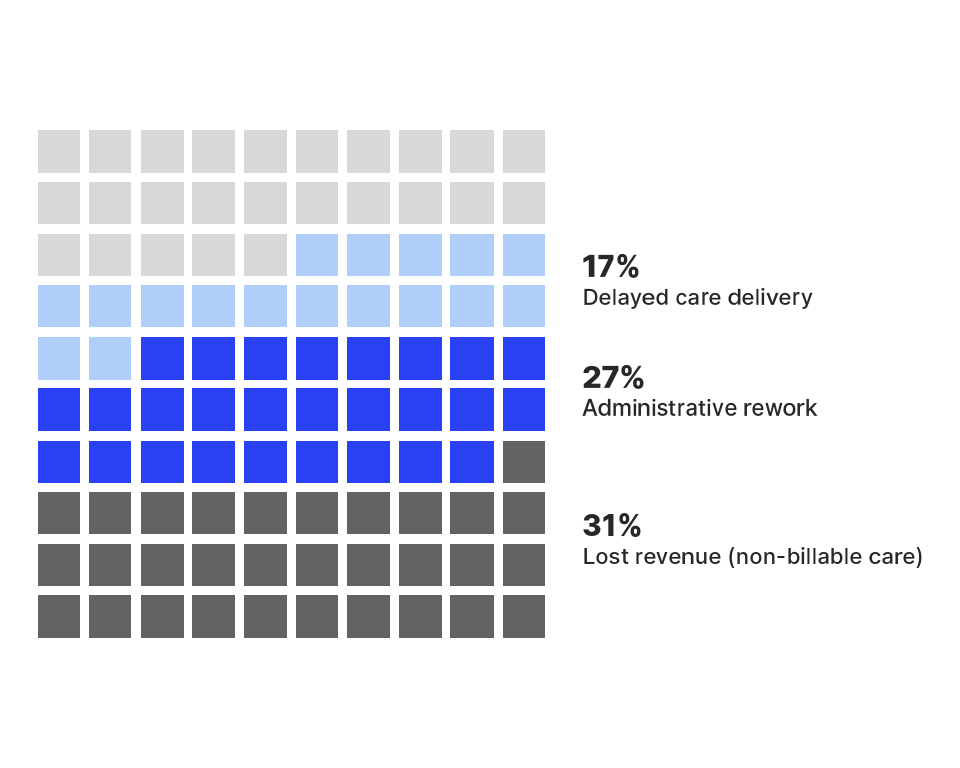
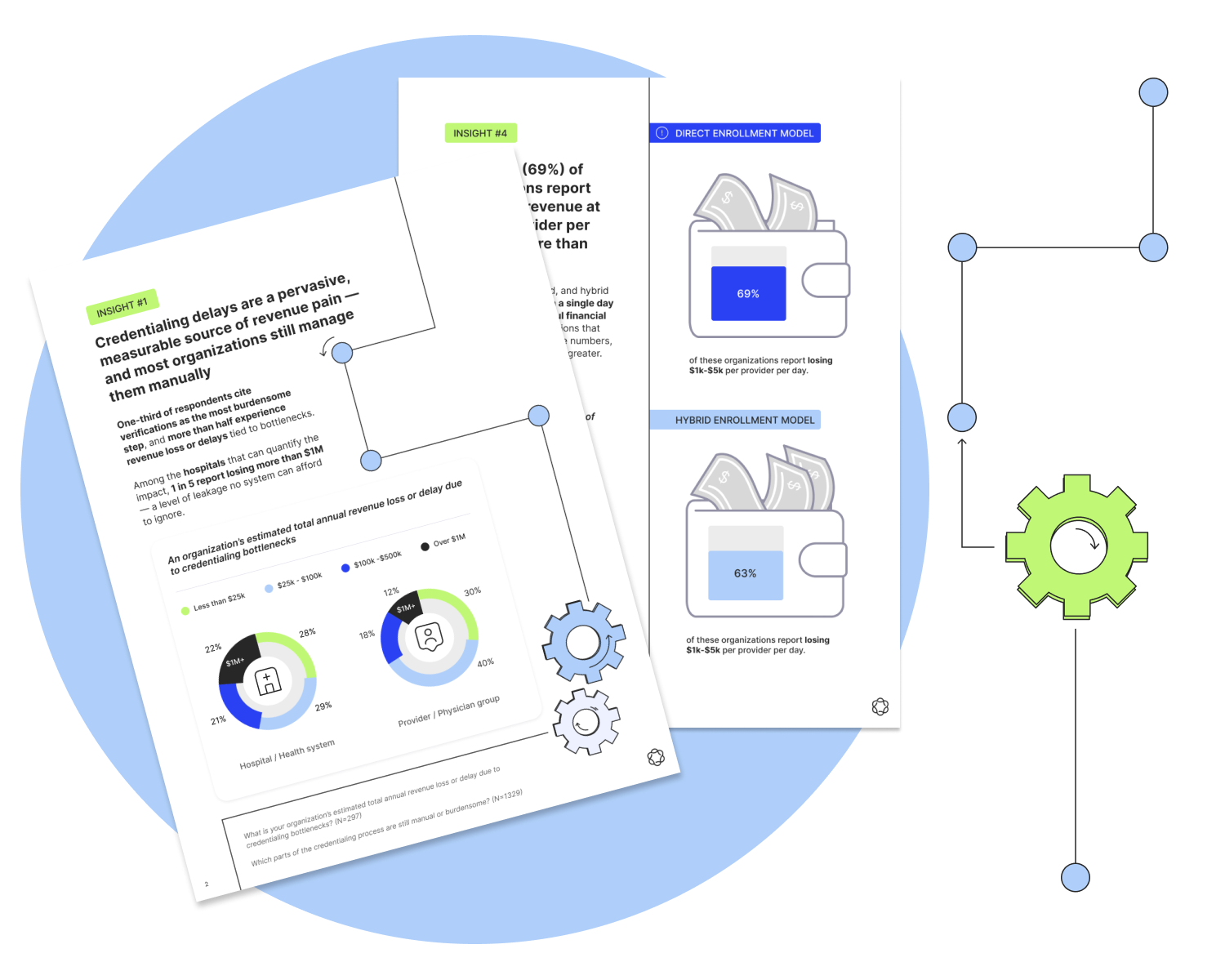
69% of health systems, hospitals and provider groups report losing $1k–$5k per provider per day due to payer enrollment delays which create months of uncompensated care, administrative backlogs and compounding financial strain.
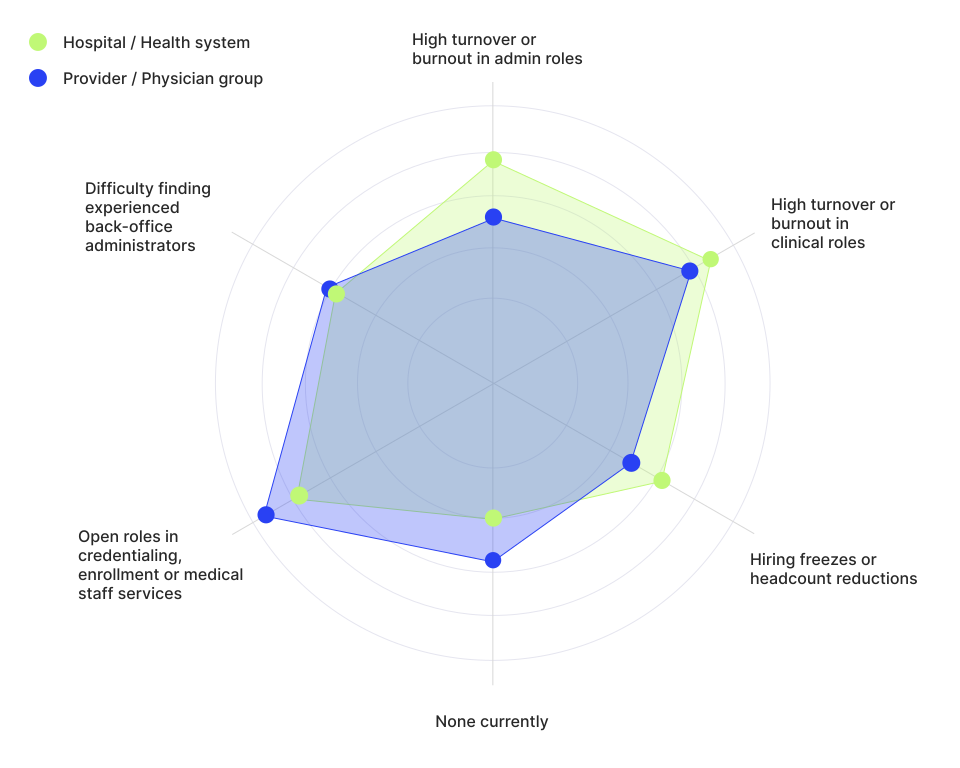
Staffing pressure is now a financial constraint. 38% of organizations report high turnover or burnout, while 20% have open credentialing and enrollment roles and 15% struggle to hire experienced administrators. When capacity falls short, provider onboarding slows — delaying patient care and pushing revenue further out.
.svg)
While AI adoption is accelerating, investment remains concentrated on clinical documentation. Highly manual, revenue-critical workflows receive just 12% of AI spend, and 16% of organizations aren’t investing in AI at all due to compliance and integration concerns — leaving preventable delays in place.