

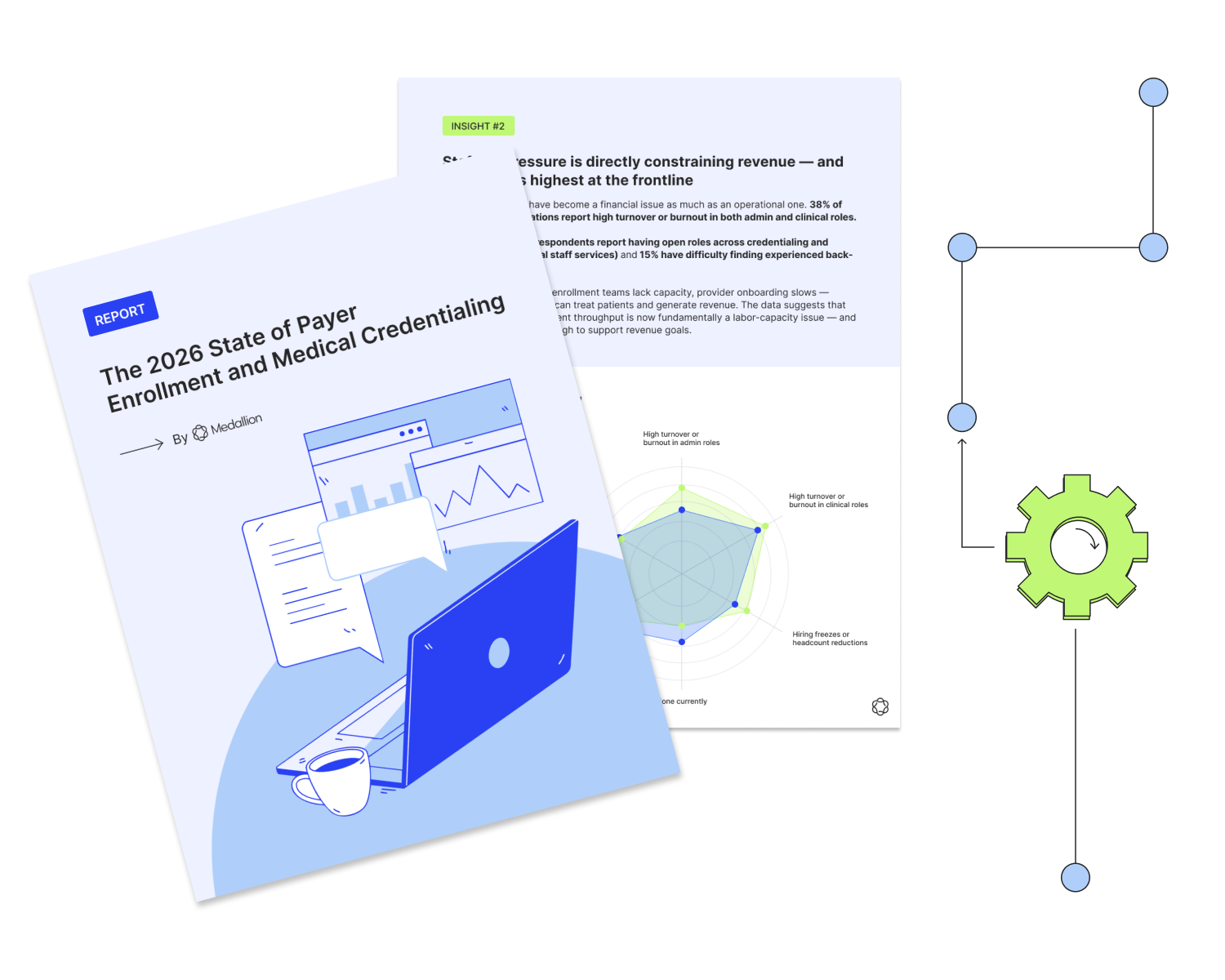
The 2026 State of Payer Enrollment and Medical Credentialing for Operations Leaders

Healthcare operations leaders are entering the new year facing tighter margins, staffing instability, and growing friction between modern tools and legacy workflows. Discover the pressures and the trends leaders need to track to protect access, throughput, and revenue.

I feel like payer enrollment needs to have more automated AI integration. I work for a large hospital and we are constantly opening new locations and hiring new providers, but not hiring any more employees for enrollment coordinators and credentialing coordinators. Manually entering every application is way too time consuming."

Jessica B.
Enrollment Coordinator at Cincinnati Children's Hospital Medical Center

A look at some of the 2026 trends operations leaders should know

How is staffing pressure directly impacting revenue for healthcare organizations?

With 38% of organizations reporting high turnover or burnout, shrinking clinical and admin teams are making manual credentialing and enrollment harder to sustain — driving delays and directly constraining revenue.

Why does in-house credentialing ownership continue to drive delays?

55% of healthcare organizations manage credentialing entirely in-house, often without the tools needed to offset staffing strain or manual work. As volume grows, this structure can slow throughput and extend onboarding timelines.

How many organizations are leveraging AI for credentialing and enrollment?

While AI adoption is accelerating, investment remains concentrated on clinical documentation. Highly manual, revenue-critical workflows receive just 12% of AI spend, and 16% of organizations aren’t investing in AI at all due to compliance and integration concerns — leaving preventable delays in place.